
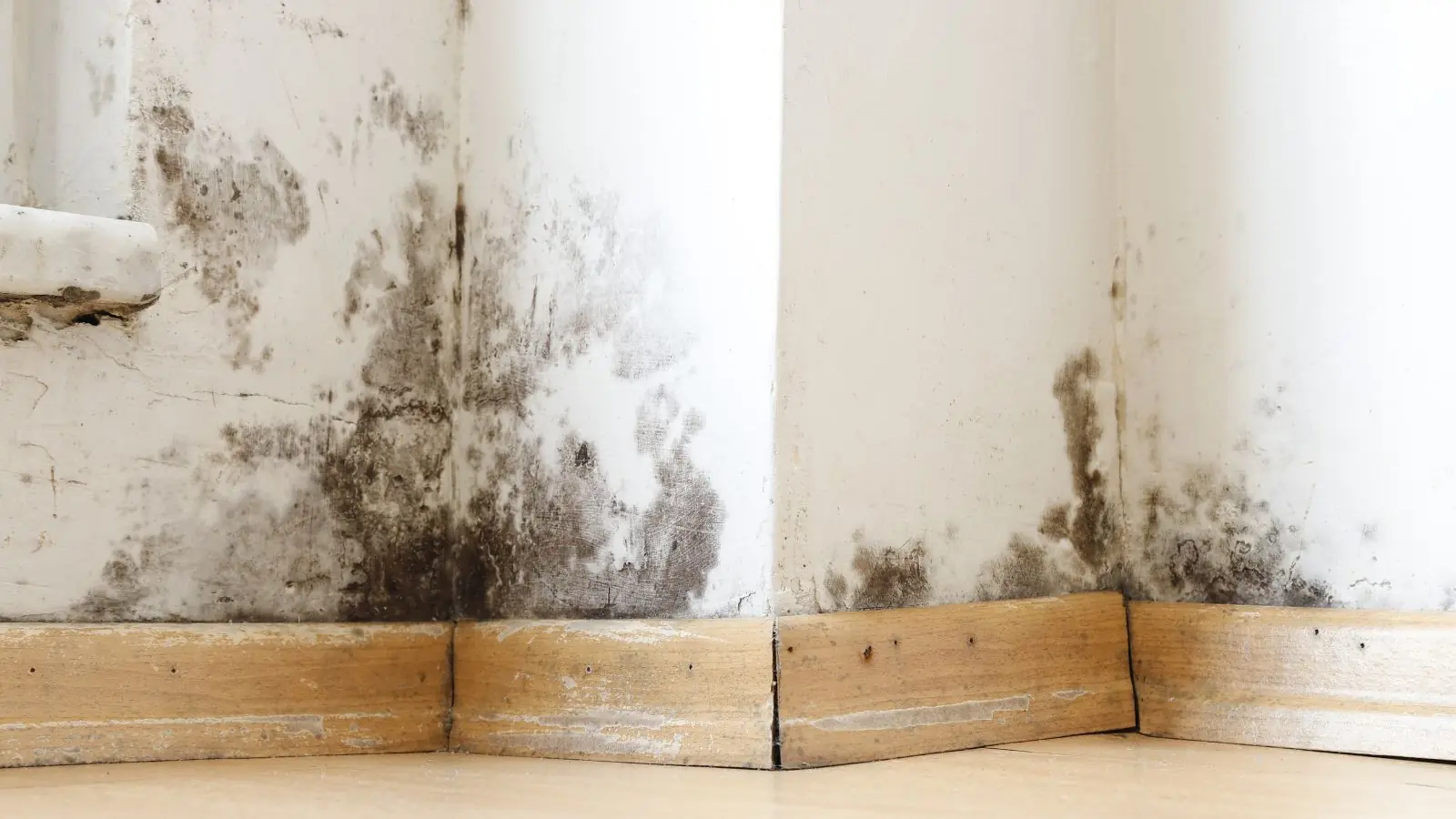
Finding mold after water damage in Duarte, CA raises a fair question. Can I handle this, or do I need a crew? The answer depends on four things you can check yourself. How big is it, what is it growing on, is it visible or hidden, and did the water reach insulation or the inside of a wall.
This guide gives you a decision table, explains containment and negative air in plain words, and covers the step people skip most often. The leak has to be fixed before any cleanup counts.
Fix the leak first
Cleaning mold while a pipe still drips is like mopping beside an open tap. The EPA says to fix plumbing leaks and other water problems as soon as possible and to dry all items completely. It also says moisture control is the key to mold control. Until the source is repaired and the area is dry, any cleanup is temporary.
Shut the water at the fixture or main valve, get the pipe or appliance repaired, and then deal with the damage. If you are past the 24 to 48 hour window the EPA and CDC give for drying, that is when mold becomes a realistic concern and the decisions below matter.
Clean it yourself or call a pro
| What you have | Handle it yourself | Call a pro |
|---|---|---|
| Size | A small patch you can reach and wipe in one sitting | Large areas, several rooms, or a patch that keeps growing |
| Material | Hard, non-porous surfaces such as tile, glass, sealed metal or hard plastic | Porous materials such as drywall, ceiling tile, carpet, pad, insulation or unsealed wood |
| Visibility | Clearly visible on a surface you can dry | Musty smell with no source, or growth you only see after opening a wall |
| Insulation | Not involved | Insulation got wet, or the wall cavity is damp |
| Cause | Single, known, fixed leak | Long-term or unknown leak, or repeated wetting |
Porous materials are the key column. Mold sends roots into drywall paper, carpet backing and wood grain, so surface wiping rarely gets all of it. Items like that are normally removed and replaced, not scrubbed. A tile wall is a different story, because it can be wiped and dried.
What you can safely clean
For small areas on hard surfaces, the EPA approach is detergent and water, followed by complete drying. Wear gloves, goggles and an N95-type mask that fits. Keep the work area closed off from the rest of the house, and do not use a regular household vacuum, since it can blow fine dust back into the air.
- Wipe, rinse the cloth, and bag it afterward.
- Dry with a clean towel, then use a fan to finish.
- Throw away anything porous that has visible growth, such as a wet cardboard box or old carpet scrap.
- Photograph the damage before you discard anything, in case you file a claim.
When it needs a crew
A professional remediation job follows the ANSI/IICRC S520 standard for mold remediation, a published industry standard. The core ideas are simple once you strip out the jargon.
Containment means sealing off the work area with plastic sheeting and zipper doors so dust and spores stay in one room. Think of it as building a temporary box around the problem.
Negative air means a HEPA filtered machine pulls air out of the contained space and exhausts it outdoors or through the filter. Because more air leaves than enters, any leak in the plastic pulls air inward, not outward. Dust is drawn toward the machine instead of drifting into your hallway.
Removal and cleaning comes next. Crews cut out damaged drywall or flooring, bag it in the contained area, and clean the framing and surfaces with HEPA vacuums and damp wiping. Then the area is dried, checked with moisture meters, and rebuilt.
Not sure which side of the line you are on?
Call the 24/7 line and describe the size, the materials and how long it has been wet. If the situation needs eyes on site, we will say so plainly.
Our mold remediation service covers containment, removal and drying, and the drying phase overlaps with water mitigation when moisture remains in the structure. Homes near Monrovia and Azusa show the same pattern. A wet wall gets treated as a structure, not just a surface.
Duarte local note: licenses, and when to call 911
In California, work that totals $1,000 or more in labor and materials needs a licensed contractor, per the Contractors State License Board. Mold cleanup beyond a small wipe can pass that number quickly once demolition and rebuild are included. Ask for the CSLB license number and check it on the CSLB website before you sign.
Safety comes first. If water has reached outlets, light fixtures or a panel, or a ceiling is sagging with water behind it, stay out and call 911. LA County Fire Station 44 is at 1105 Highland Avenue in Duarte, and its line is (626) 358-3118. Do not touch wet electrical equipment while standing in water.
Sources: CSLB, EPA, CDC, city website
Why porous materials are the sticking point
Ceiling tile, carpet pad, fiberglass insulation and drywall paper all hold water in small pores and fibers. Once they have stayed wet past the drying window, cleaning the face rarely reaches the inside. A crew removes them, bags them in the contained area, and replaces them after the framing is dry. Solid wood framing is different. It can usually be cleaned and dried in place, then checked with a moisture meter.
The California Department of Insurance says homeowners policies do not cover flood damage but do cover other kinds of water damage, and that mold caused by a covered peril may be covered. If you suspect mold after a leak, contact your adjuster right away. Keep receipts for any reasonable temporary repairs and photographs of the damage. Coverage depends on the cause and your policy, so ask your insurer.
A quick walkthrough of the first day
Think of the first twenty four hours as three jobs. Stop the source, protect your belongings, and get moisture readings. Move furniture off wet carpet and set aluminum foil or blocks under legs. Open closet doors and cabinet doors so air reaches the back walls. Lift wet area rugs and hang them to dry. Take photos of every wet surface and every damaged item before anything is moved or thrown out.
Stop the water, document it, move belongings out of wet zones, and start drying. If anything on the decision table lands in the call column, do not scrub it. Scrubbing a porous, damp material spreads the problem and often makes removal bigger.
Questions Duarte homeowners ask
Containment is the plastic barrier around the work area. Negative air is a HEPA filtered machine that pulls air out of that space so it flows inward through any gaps. Together they keep dust in the work zone and out of the rest of your home.
Drywall is porous, so surface mold usually means the material is affected below the paint. A very small patch on a sealed surface may wipe off, but damp or stained drywall is normally cut out and replaced.
Because the moisture is what feeds growth. EPA guidance is to fix plumbing leaks and dry everything completely. Cleaning an area that gets wet again just restarts the problem.
Stay out, turn off power only if you can reach the panel safely and dry, and call 911. LA County Fire Station 44 on Highland Avenue serves Duarte, and its non-emergency line is (626) 358-3118.
Yes. Work totaling $1,000 or more in labor and materials requires a California contractor license, and the contract must show the CSLB license number. You can check a license on the CSLB website before you hire.