
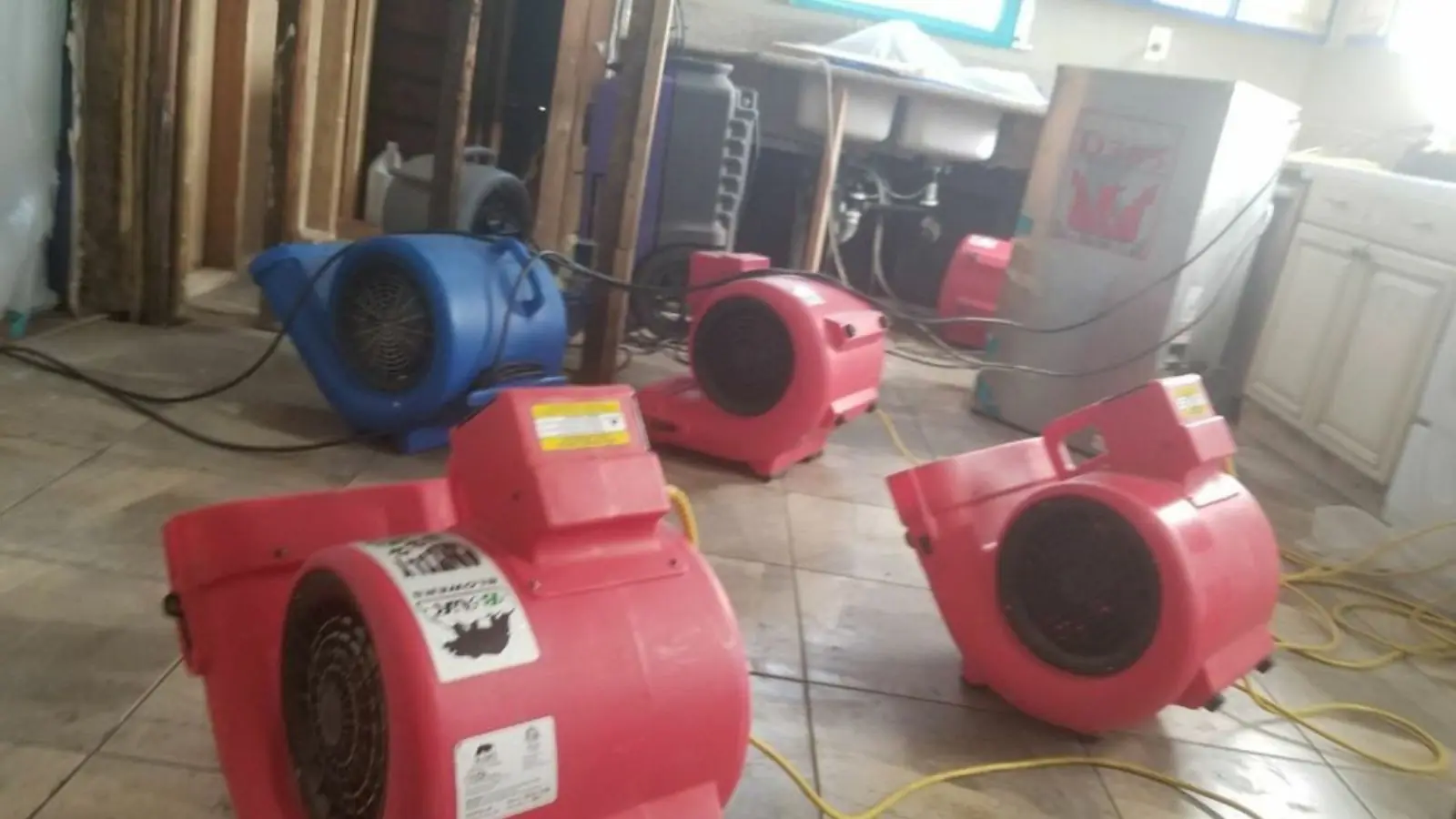
Water mitigation in Duarte, CA is an emergency service because every hour of wetness adds to the final bill. Mitigation means stopping the damage from spreading, which covers shutting off the source, removing standing water, mapping moisture and starting controlled drying. This line is answered 24/7 and a crew is sent as soon as one is available.
While you wait, shut off the water at the fixture or main, lift valuables off wet floors, and keep power off in any wet area you cannot reach safely. Stay out of rooms where water touches outlets or the panel, and call 911 or the utility before calling us if there is any electrical or gas risk.
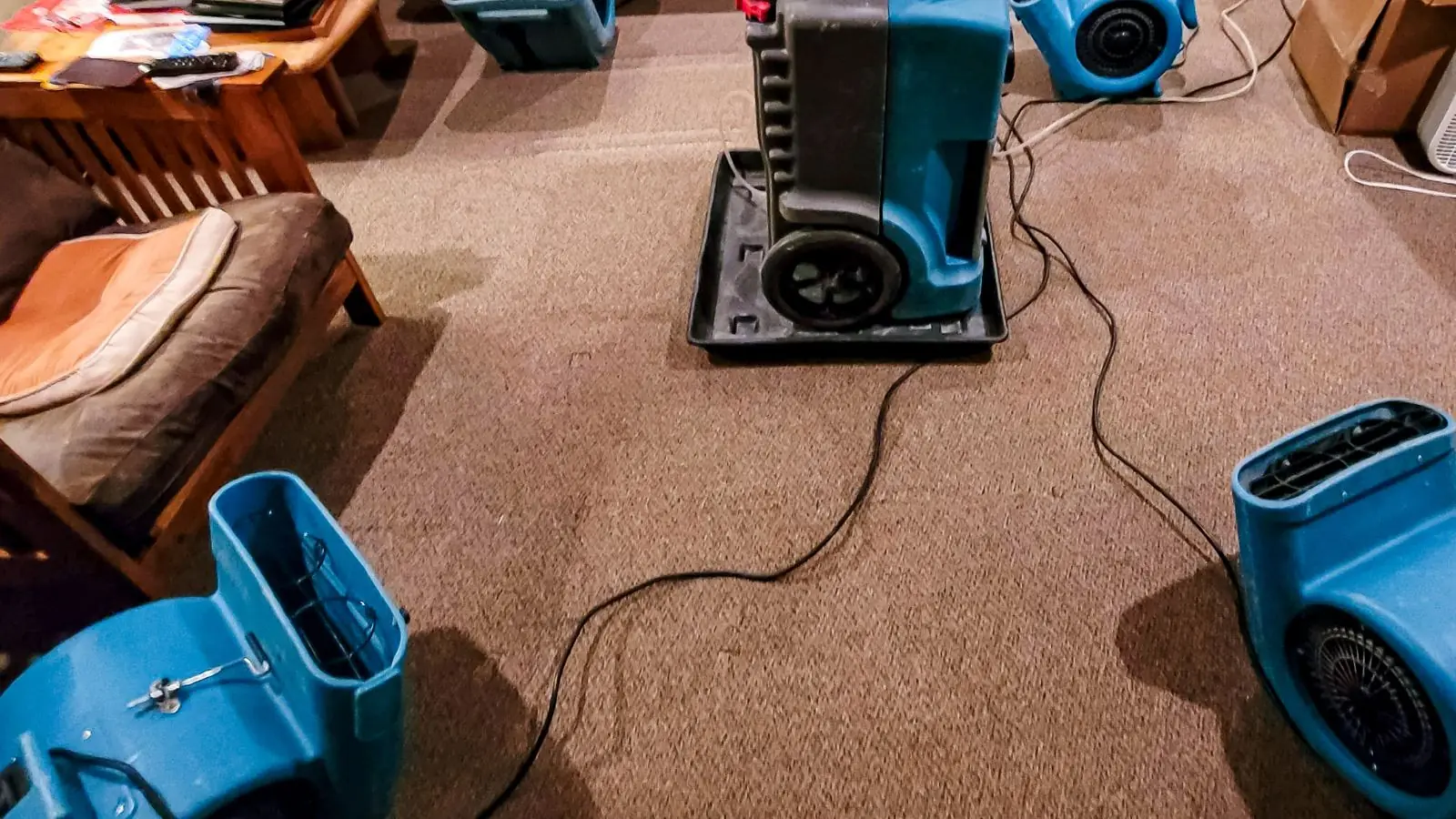
My Carpet Is Soaking and the Wall Feels Damp. Now What?
Most people do not search for water mitigation. They search for things like a wet carpet that will not dry, a damp wall after a pipe break or a musty smell in a closet. Those are the symptoms, and mitigation is the fix. It is the work done in the first one to three days, before the question becomes how to rebuild.
A wall that feels cool or damp to the touch is holding water in drywall and insulation. Carpet that squishes underfoot has a saturated pad underneath. A musty smell means moisture has been there long enough for microbial growth to start. Each of those is a reason to call now instead of waiting to see if it dries.
When Standing Water Is an Emergency
Standing water is an emergency whenever it is deeper than a puddle, reaching baseboards or insulation, or spreading from room to room. Time matters because drywall wicks water upward, flooring swells and wood framing absorbs moisture. The EPA and CDC both advise drying water-damaged areas and items within 24 to 48 hours to prevent mold growth, so a night of waiting is not harmless.
What to do first: safety before drying
If water has reached outlets, appliances or the electrical panel, do not walk through it. Cut power only if you can reach the panel while standing on a dry surface. Otherwise call 911 or the utility first and stay out.
Water that came from a sewer line or backed up from a drain is contaminated. Keep people and pets out and wait for protective gear.
How Mitigation Works
Mitigation follows a sequence. Skipping a step usually shows up later as a wet wall that was closed in too early.
- Source control. The leak or overflow is stopped so water is not still arriving.
- Extraction. Pumps and extraction units remove standing water and pull water from carpet and pad.
- Moisture mapping. Meters and a thermal camera find wet areas that cannot be seen, including inside walls and under floors.
- Controlled drying. Air movers push dry air across surfaces and LGR dehumidifiers pull moisture out of the air so it does not settle somewhere else.
- Monitoring. Technicians return to check readings and adjust equipment until the structure meets the dry standard.
- Documentation. Photos, readings and equipment logs are kept for your insurance file.
ANSI/IICRC S500 is the published standard for professional water damage restoration, and it organizes this work by water category and by how fast evaporation is needed. You can ask any company whether its crews work to it.
Structural Drying
Structural drying is the part of mitigation that dries the building itself, meaning framing, subfloor, drywall cavities and concrete. It is slower than extraction because water moves out of dense materials gradually. Air movers are placed to sweep every wet surface, and dehumidifiers are sized to the volume of the space, not the square footage alone.
Wall cavities are often dried through small holes or removed baseboards so air can reach the inside. Hardwood and subfloor may use drying mats that pull moisture out through the underside. The readings tell the story. If the same wall reads wetter on day three than day two, the equipment layout changes, which is why monitoring visits matter.
| Equipment | What it does | When it is used |
|---|---|---|
| Extraction unit | Pulls bulk water from floors and carpet | First hours, standing or soaked materials |
| Moisture meter | Reads moisture inside wood and drywall | Assessment and every monitoring visit |
| Thermal camera | Shows cool, wet areas behind surfaces | Finding hidden moisture |
| Air mover | Moves air across wet surfaces to speed evaporation | Throughout drying |
| LGR dehumidifier | Removes moisture from the air | Throughout drying, sized to the space |
| Drying mat | Pulls moisture up through hardwood or subfloor | Floors worth saving |
Wet right now?
Call the 24/7 line before the water reaches drywall and flooring.
What Affects the Cost of Mitigation
- Water category. Clean, grey and contaminated water are handled differently and disposed of differently.
- Area and depth. More wet square footage and more saturated materials mean more equipment.
- Drying days. Equipment runs until readings reach the dry standard, so the number of days varies by job.
- Access. Wall cavities, crawl spaces and tight floor plans change how equipment is placed.
- Monitoring visits. Technicians check readings during the drying period and adjust equipment.
We explain the scope and price before work starts, and anyone quoting a flat number without seeing the damage is guessing.
Insurance Note
Sudden and accidental water damage is often covered, and insurers also expect you to take reasonable steps to prevent further damage, which mitigation is. Photograph the damage, keep receipts and report the loss quickly. Check your policy and ask your insurer what applies.
Duarte local note: utility versus house
The City of Duarte lists California American Water as the water provider, and the utility's water quality report describes a Duarte system supplied entirely by groundwater. Water in the street or a broken main outside your meter belongs to the utility. A broken pipe inside the wall belongs to you, so shut the valve at the house and call the utility for anything on its side.
Duarte City Hall is closed on Fridays and open Monday to Thursday, which is worth knowing if a mitigation job leads to a permit question late in the week.
Sources: City of Duarte website, California American Water report, EPA, CDC.
Mitigation Across the Foothills
The same crews work in Azusa and Arcadia. After drying is done, water damage repair and mold remediation cover the rebuild and any growth that started.
Water Mitigation questions
Yes. The dispatch line is answered 24/7, including nights, weekends and holidays, and a crew is sent as soon as one is available.
Mitigation stops the damage and dries the structure. Restoration rebuilds what could not be saved. They are written as separate stages so you can see each one.
It depends on the materials and how wet they got. Technicians check moisture readings during monitoring visits and keep equipment running until readings match the dry standard.
Air movers and dehumidifiers make steady noise and run continuously. Your technician can explain the layout and what to expect overnight.
Equipment alone does not map moisture or document drying for insurance. Ask dispatch what a full mitigation visit includes before deciding.
The EPA and CDC advise drying water-damaged areas and items within that window to prevent mold growth.