
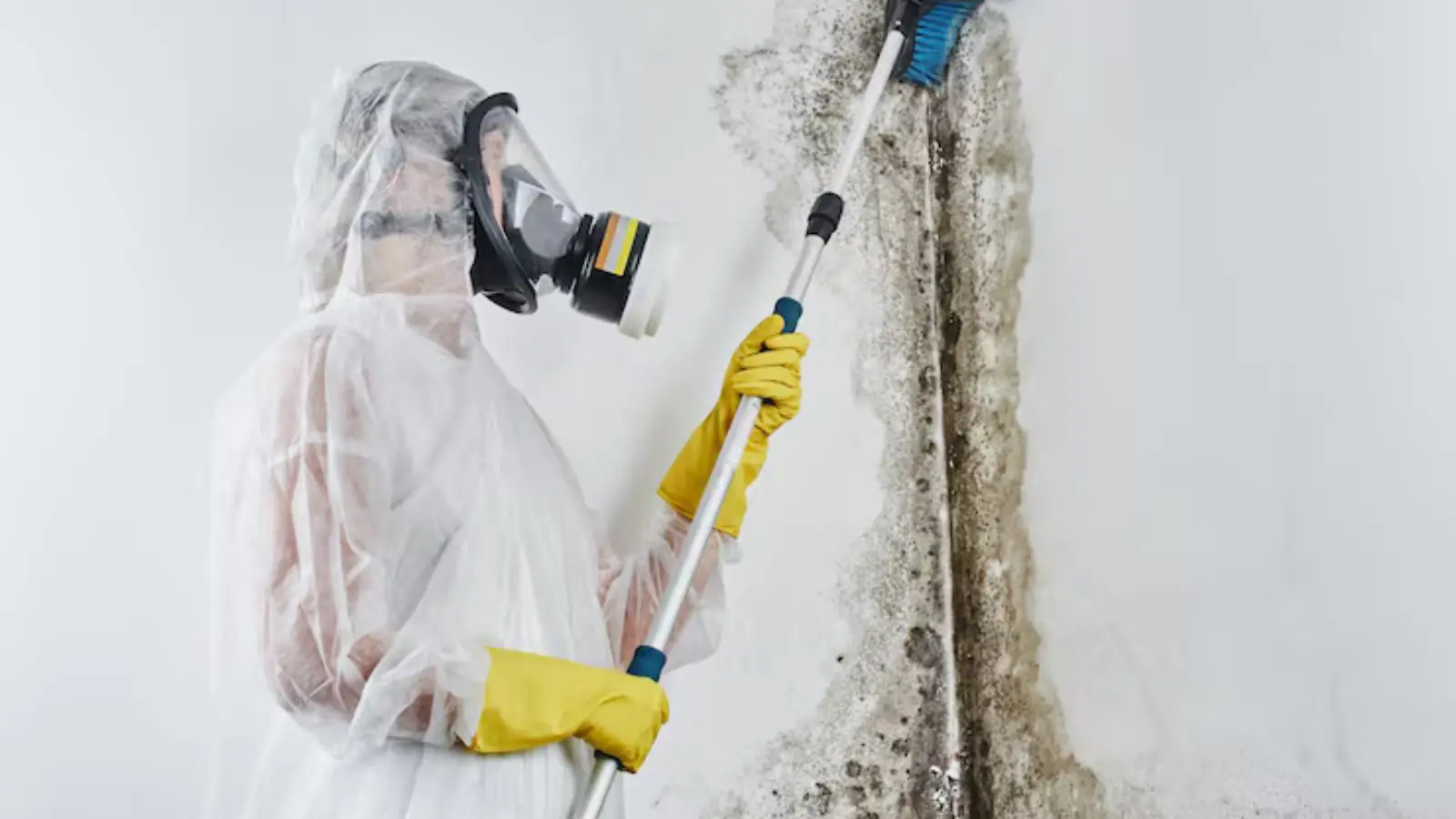
Mold remediation in Duarte, CA starts with water. Mold needs moisture to grow, so the real fix is finding the leak or damp area behind it, then removing the growth and the material it affected under containment. Dispatch is answered 24/7, and an assessment visit is arranged as soon as a crew is available.
Most mold calls follow a leak. A toilet supply line weeps into a subfloor, a sink drain drips inside a cabinet, an air conditioner condensate line backs up, or a roof leak wets an attic wall for weeks. The cleanup cannot succeed unless that source has been fixed first.
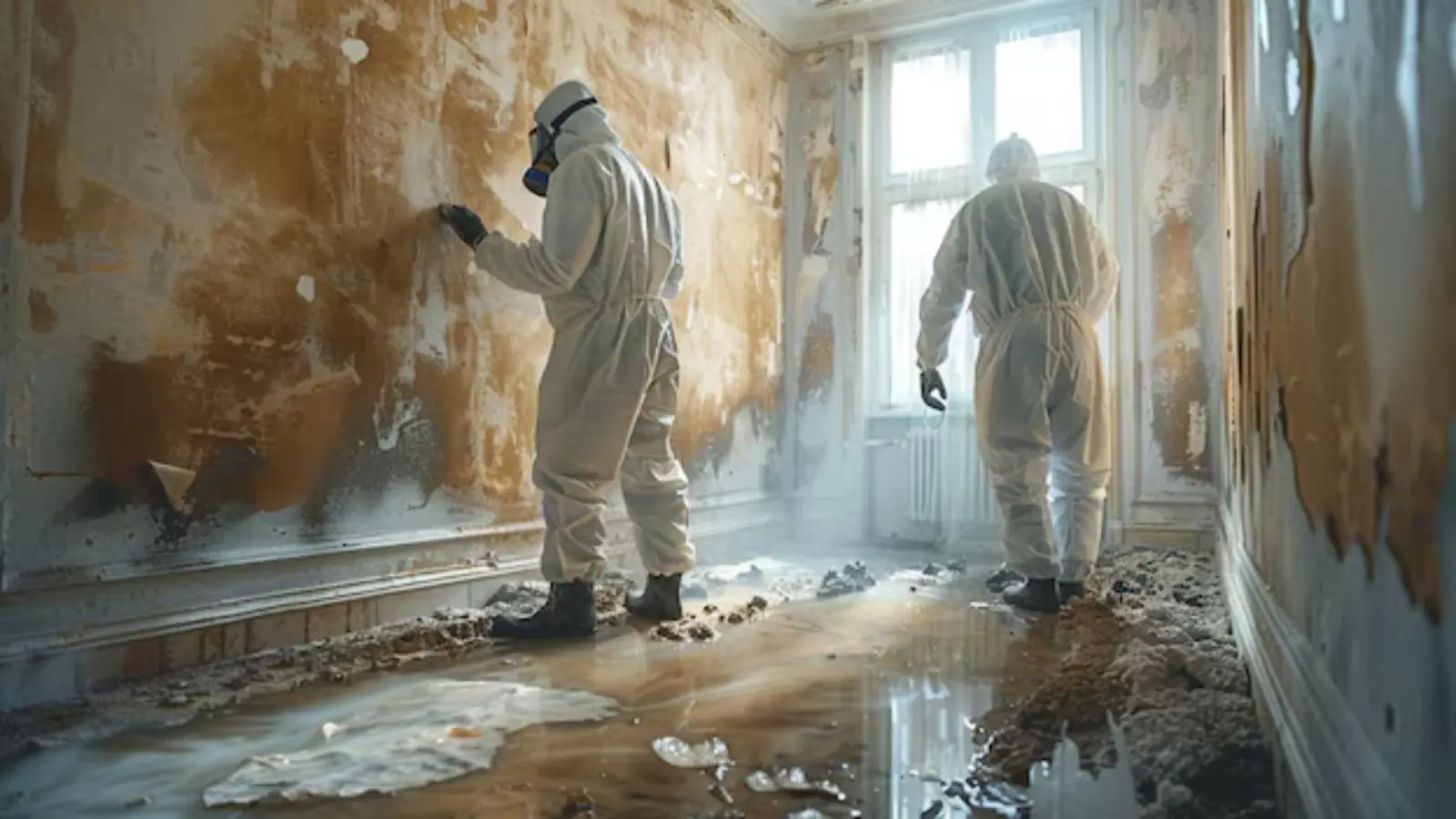
I Can See Dark Spots on My Wall. Is That Mold?
People rarely search for remediation. They search for black spots in a shower corner, a musty smell in a closet, or fuzzy patches where furniture was pulled away from an outside wall. Surface discoloration can be mold, mildew, dirt or staining, and only an inspection or testing can say which. What matters first is where the moisture is coming from.
A musty smell with no visible growth often means moisture inside a wall, under flooring or above a ceiling. A spot that returns after cleaning usually means the water source is still active. Both are reasons to schedule an assessment instead of scrubbing again.
How Mold Remediation Works
- Find and stop the moisture. Meters and a thermal camera locate wet materials, and the plumbing, roof or condensation problem is fixed.
- Set up containment. Plastic barriers seal the work area, and negative air machines with HEPA filtration keep disturbed spores from drifting to other rooms.
- Remove affected material. Porous materials such as drywall, insulation and carpet with growth are cut out, bagged and sealed.
- Clean. Remaining surfaces are HEPA vacuumed and wiped, and framing is cleaned or abrasively cleaned as needed.
- Dry. Air movers and dehumidifiers dry the structure to the dry standard.
- Verify. The crew checks that moisture readings are normal and the work area is visibly clean. Independent clearance testing is optional and is better done by a separate company.
ANSI/IICRC S520 is the published standard for professional mold remediation, and you can ask any company whether its crews work to it. California does not set licensing, training or certification requirements for mold assessors or remediators, so ask every company what standard it follows.
Want someone to look at it?
Call the 24/7 line and describe where the mold is, what caused the leak and how big the area is.
Mold Removal and Black Mold Cleanup
The color of a patch does not tell you what it is. A small patch on a hard surface, such as a bathroom tile line, can be cleaned by a homeowner using detergent and water, wearing gloves, eye protection and a mask. Larger areas, anything on drywall or insulation, or any area bigger than a couple of square feet calls for a crew.
Cleaning mold with bleach on porous materials does not remove the growth underneath, and spraying it can drive spores into the air. Work in the right order. Fix the water, contain, remove, clean, dry. Reversing the order leaves the cause in place.
Mold After Water Damage
Mold can begin to grow within a day or two on wet materials, and both EPA and CDC advise drying water-damaged areas and items within 24 to 48 hours to prevent it. When water damage sits for days, mold becomes part of the job. If drying was done late, ask for a moisture check behind baseboards, under flooring and inside wall cavities before closing anything up.
This is why water mitigation matters so much. Fast drying prevents many mold calls, and when mold does appear, the same equipment dries the structure after remediation. If sewage or flood water was involved, flood damage restoration addresses the contaminated materials first.
| What you see | Likely meaning | Next step |
|---|---|---|
| Small spots on tile or a hard surface | Surface growth from humidity | Clean with detergent and water, improve ventilation |
| Spots on drywall or ceiling | Moisture inside or above the material | Assessment, since drywall is porous |
| Musty smell, nothing visible | Moisture in a wall, floor or ceiling cavity | Moisture mapping with meters and thermal imaging |
| Growth after a leak or flood | Water sat longer than 24 to 48 hours | Containment and removal under S520 practice |
| Home sale or loan requires clearance | Lender or buyer wants documentation | Remediation, then separate independent clearance testing |
Mold and Home Sales
Some callers ask because a buyer's lender wants mold addressed before closing. That is a legitimate reason to call. The work is remediation first and, if the buyer or lender wants it, independent clearance testing by a separate company that did not do the work. We cannot promise that any lender will accept a result, so ask the lender what documentation it requires.
What Affects the Cost of Mold Work
- Area and material. Growth on drywall or insulation means removal and rebuild, while growth on framing means cleaning.
- Containment. Larger or more disturbed areas need more barriers and air filtration.
- Source of moisture. Fixing the leak is separate from the remediation.
- Testing. Optional testing is its own line item.
- Rebuild. Drywall, insulation and paint after removal are itemized apart from remediation.
We explain the scope and price before work starts. Mold from a covered water loss may be covered under your policy, so tell your adjuster and check the policy.
Duarte local note: who regulates mold work
The California Department of Public Health says there is no legal requirement in California for training, licensing or certification of mold assessors or remediators, and that no state indoor mold exposure limits exist. So hiring depends on you asking the right questions, including which standard the company follows and what the written scope covers.
The Contractors State License Board does require a license for work totaling $1,000 or more in labor and materials. The LA County consumer department advises that a contract show the CSLB license number and that down payments not exceed $1,000 or 10 percent, whichever is less. Ask for the license number and a written scope before you agree to anything.
Sources: California Department of Public Health, CSLB, LA County Department of Consumer and Business Affairs, Census QuickFacts.
Mold Help Near Duarte
The same crews respond in Arcadia and Glendora. Health questions about mold exposure belong with your physician.
Mold Remediation questions
Yes. The leak has to be fixed first. The crew then contains the area, removes affected drywall or other porous material, cleans and dries the space.
Call the 24/7 line and describe the problem. An assessment is arranged as soon as a crew is available. We do not promise a specific arrival time.
Independent testing is best done by a company that did not do the remediation. We can work to your tester's requirements.
The California Department of Insurance says mold caused by a covered peril may be covered. Report the loss, tell your adjuster about suspected mold and check your policy.
Bleach on porous materials does not remove growth beneath the surface. Fix the moisture and remove affected porous material instead.
Health questions about mold belong with your physician. Our role is to find the moisture and remove affected material.