
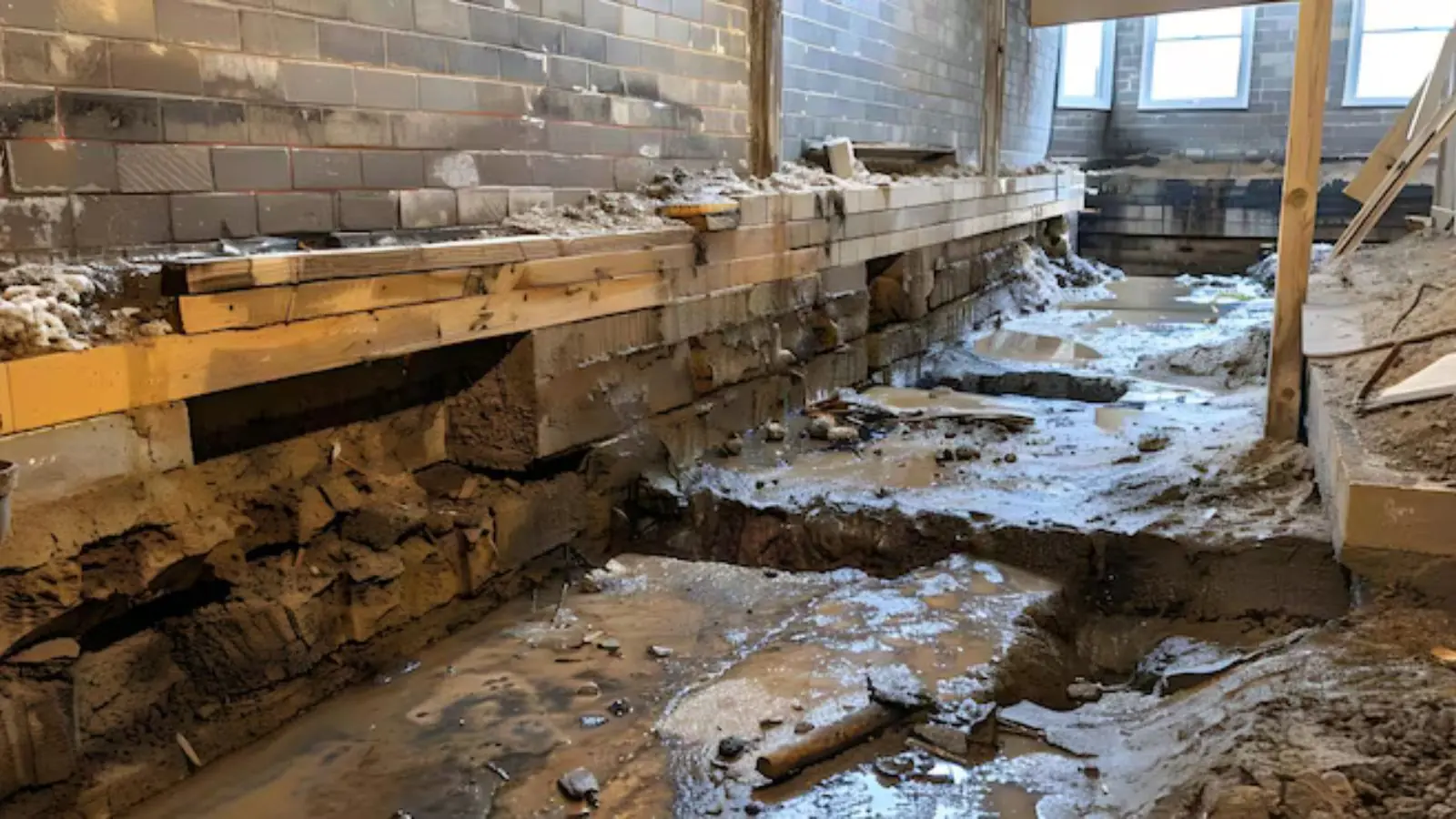
Storm runoff and debris flow cleanup in Duarte, CA is a different job from a pipe break. The water is usually muddy, it carries soil and debris, and it can bring contamination into the home. Duarte sits below the San Gabriel Mountains, so a heavy winter storm can send runoff down the canyons and toward streets and yards.
The National Weather Service describes the Los Angeles climate as Mediterranean, with a dry summer and a rainy winter. That pattern is why storm preparation belongs on your calendar before the rainy season, not after the first downpour.
Safety before cleanup
Stay out of moving water. Even shallow, fast water can knock an adult down, and it can hide debris and open drains. Never drive or walk through flowing water.
Assume mud and floodwater are contaminated. They can carry sewage, chemicals and sharp debris. Wear boots, gloves and eye protection, and keep children and pets away.
Treat power as live. Do not enter a room with water around outlets or appliances until the power is off. Call 911 for electrical or gas danger first.
What the recent history tells us
Duarte local note: burn scars, K-rails and old maps
The foothills above Duarte have a record of fire followed by runoff. The USGS reports the Fish Fire burned over 12 square kilometers in June 2016. A debris flow then came down a small canyon above the Las Lomas debris basin on January 20, 2017. Burned slopes shed more mud for a time, so near a canyon, watch evacuation alerts.
On February 17, 2017, mud overflowed K-rails on Mel Canyon Road and 202 homes were ordered to evacuate, with no significant home damage reported. Learn your evacuation route now, since orders can come fast.
A June 12, 2022 Fish Fire burned about 39 acres in Fish and Opal canyons and was contained that day. LA County Public Works named Melcanyon Road and Deerlane Drive, and said city-placed K-rails limited access impacts for 44 residential properties.
A Phase 2 mudflow alert followed for that burn scar from January 4 to 6, 2023. The Fish Canyon Falls Trail is closed for fire and flood damage, so stay off it after rain.
A city FAQ also points insurers to Zone D, Panel 065026, a map dated March 22, 1999. That is an old panel. Instead of relying on it, look up your own address on the current FEMA Flood Map Service Center, and ask your insurer what applies to you.
Sources: USGS, LA County Public Works, city of Duarte website, news reports
The insurance gap
This is the part that surprises people. Standard homeowners insurance typically excludes flood, mudslide and debris flow. The California Department of Insurance describes a mudflow as a river of liquid and flowing mud, and says soil or saturated ground sliding down a slope is not a mudflow in policy terms. The exact line between those matters when a claim is filed, so ask your insurer how your policy words it.
Flood coverage is usually a separate policy, and one federal option is the National Flood Insurance Program. FEMA says an NFIP policy typically takes 30 days to become active. If a storm is already forecast, a new policy will not help with that storm. The NFIP claims line is 1-800-638-6620 if you already hold a policy.
| Question | Typical water damage claim | Flood or mudflow claim |
|---|---|---|
| Common cause | Burst pipe, appliance failure | Runoff, overflowing channels, mud and debris from outside |
| Standard homeowners policy | Often covers if sudden | Typically excluded |
| Separate policy needed | Usually no | Often yes, such as NFIP or private flood |
| Waiting period for new policy | Not applicable | NFIP typically 30 days |
| What to ask | Is the cause sudden and accidental? | Do I have flood coverage, and what does it include? |
Mud or storm water inside?
Call the 24/7 line. Tell the dispatcher how deep the water was, whether power is off, and what the water looks like.
Sandbags and diverting runoff
LA County Public Works advises that small, isolated mud and debris flows are possible in burn areas with under two years of recovery. Its guidance is to use sandbags to direct runoff, and free sandbag locations are listed at READY.LACounty.gov. Check the site before the storm, not during it.
Sandbags work best to steer shallow water around doors and garage openings, not to hold back deep or fast flow. Place them so water is guided toward the street and away from neighbors' walls.
What a restoration crew does after mud and storm water
Storm water and mud are treated as contaminated. The standard approach follows ANSI/IICRC S500, the published standard for professional water damage restoration, which sorts water by contamination level. In plain terms, the crew will do the following.
- Extract standing water and mud with pumps and extraction units, and shovel or vacuum silt from floors.
- Remove wet porous materials that cannot be reliably cleaned, such as carpet, pad, insulation and the lower part of drywall.
- Wash and sanitize remaining surfaces, including framing and subfloor.
- Dry the structure with air movers and LGR dehumidifiers, checking progress with moisture meters.
- Document the work with photos and readings for your insurance file.
Our flood damage restoration crews work through this sequence. Because floodwater is a contamination risk, do not dry wet carpet or drywall yourself and keep it in place for a crew to judge. If water entered through a broken pipe rather than from outside, our emergency water removal page covers that case.
After the cleanup
Once everything is dry and sanitized, repairs can begin. Drywall replacement needs a building permit in Duarte, and the City of Duarte Community Development counter is the place to ask what applies to your repair. Mold needs moisture, so keep checking the repaired area for dampness and musty smell over the following weeks.
We also work in neighboring foothill communities, including Monrovia and Azusa, where canyon runoff is a shared concern.
Questions Duarte homeowners ask
Typically no. The California Department of Insurance says standard homeowners policies exclude flood, mudslide and debris flow, and that soil sliding down a slope is not a mudflow in policy terms. Ask your insurer exactly how your policy treats it, and whether you hold any separate flood coverage.
FEMA says an NFIP policy typically takes 30 days to become active. That means buying one when a storm is announced will not help with that storm. If you live near a canyon, ask your agent about it well before the rainy season.
LA County Public Works lists free sandbag locations at READY.LACounty.gov. Check before storm season, and bring your own shovel. Sandbags divert shallow runoff, they do not stop deep or fast flow.
Light, dry-surface mud outdoors, with boots and gloves, yes. Mud inside walls, in carpet, or mixed with sewage is a contamination job for trained crews with proper protective equipment. Photograph everything before you move it.
No. The City of Duarte FAQ cites Zone D, Panel 065026, dated March 22, 1999, which is an old map. Look up your address on the current FEMA Flood Map Service Center and ask your insurer what applies.