
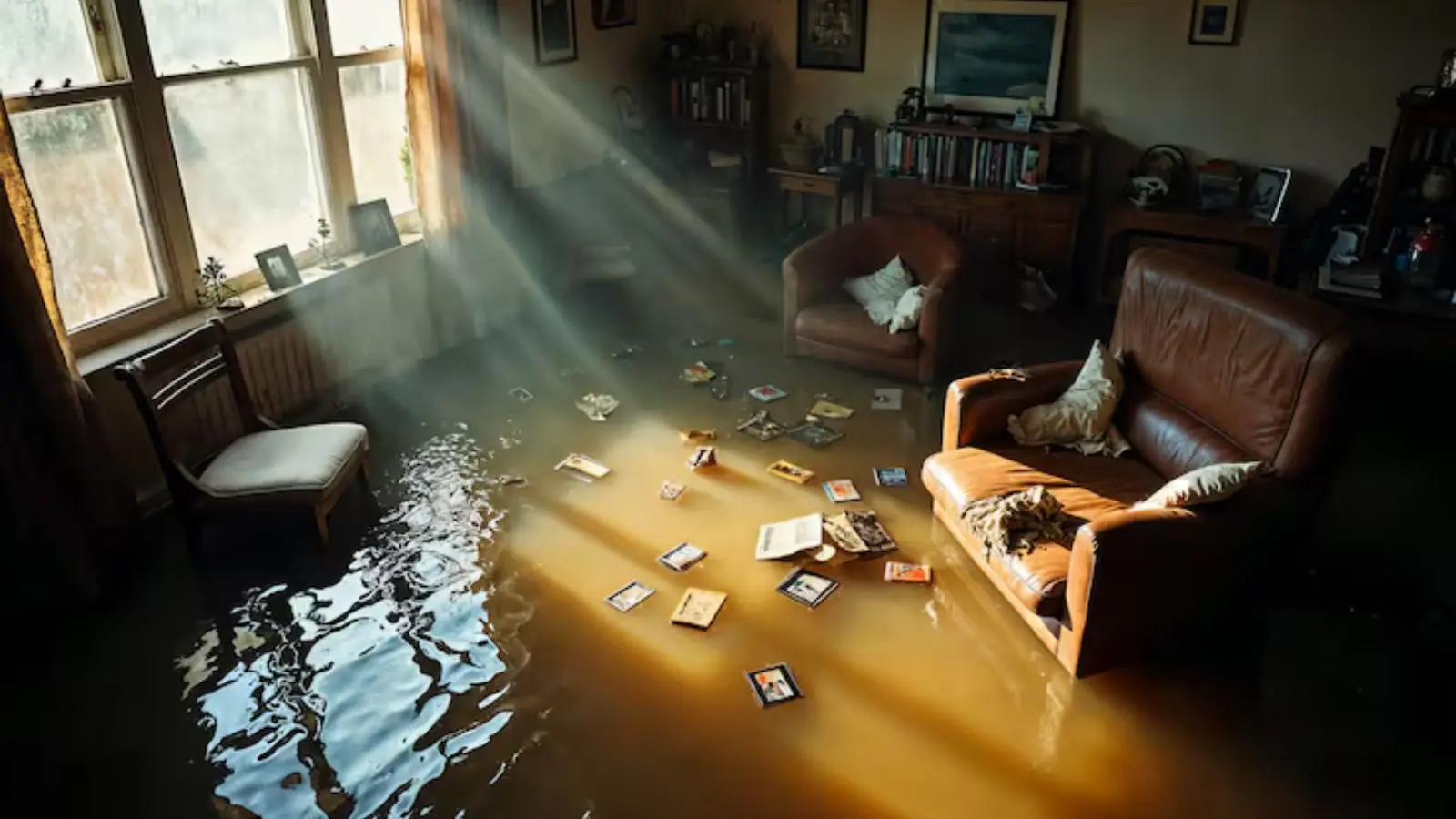
Does homeowners insurance cover water damage in California? Often, yes, but it depends on the cause. For a home in Duarte, CA, the cause decides almost everything. The California Department of Insurance states that homeowners policies do not cover flood damage, but they do cover other kinds of water damage. That one sentence hides a lot of detail, and this guide walks through it.
We are a restoration company, not an insurer or a lawyer. We cannot tell you whether your claim will be paid, and no contractor can. What we can do is explain how these claims usually work so you ask the right questions on the first call to your insurer.
Sudden and accidental versus gradual
Most policies are written around sudden and accidental events. A pipe bursts, a water heater fails, a washing machine hose lets go, and water floods the kitchen. Those are the losses policies are usually designed to cover, subject to the deductible and the wording in your own contract.
Gradual damage is treated differently. A slow drip under a sink that went unnoticed for months, a roof leak that was ignored, or seepage from a worn seal are often excluded as maintenance or wear. Insurers look at how long the damage was there, what the materials look like, and whether the homeowner had a chance to catch it. Rotted wood and long-term staining are the usual evidence.
The same appliance can fall into either category. A hose that suddenly splits is accidental. The same hose weeping for weeks may not be. This is why photos with dates and a clear record of when you discovered the problem are worth the effort.
| Situation | Often covered? | What to ask your insurer |
|---|---|---|
| Burst supply line or hose | Often yes, if sudden | Does my policy cover the water damage and the cost to access the pipe? |
| Water heater failure | Often yes for resulting damage | Is the heater itself covered, or only the damage it caused? |
| Slow leak over weeks or months | Often no | How do you define gradual, and what evidence will you need? |
| Roof leak after storm damage | Depends on cause | Was this wind or hail damage, or wear to an old roof? |
| Flood or mudflow from outside | Usually excluded | Do I have separate flood coverage, and when did it start? |
| Sewer or drain backup | Often needs an add-on | Do I have a water backup endorsement and what is its limit? |
| Mold after a covered leak | May be covered if from a covered cause | Does my policy limit mold coverage, and how do I report it? |
Treat the middle column as a rough guide, never a promise. Your policy wording, endorsements and deductible are what count, and only your insurer can decide a claim.
Flood is a separate story
Standard homeowners policies exclude flood. Rising water from outside, whether from a river, heavy runoff or rain that overwhelms drainage, is a flood loss in policy terms and is usually handled through separate flood insurance. If you are unsure what your policy says, ask your agent in writing. We cover the storm side of this in our flood damage restoration work.
Not sure what to do next?
Call the 24/7 line. We can start drying and documenting right away, and you can bring your adjuster in at the same time.
Your duty to protect the property
Most policies expect reasonable steps to prevent further damage. The California Department of Insurance says policies may not cover added damage if you did not secure the property, and that insurers reimburse reasonable protection costs. In practice, shut off the water, remove standing water, cover openings and begin drying quickly. Water damage cleanup done promptly is part of that duty.
Keep every receipt. Fan rentals, tarps, plywood, hotel nights if the home is unlivable, and the restoration invoice all belong in one folder. Record the date and time you first saw the damage, who you spoke to at the insurer, and what they said.
Report right away
The Department of Insurance advises reporting any water damage claim immediately to your agent or company. Waiting to see if the stain gets better only gives the damage longer to spread, and it can raise questions about whether you took reasonable steps. If you suspect mold after a leak, contact your adjuster right away, since mold from a covered cause may also be covered.
California's Fair Claims Settlement Practices Regulations set time limits that insurers must follow when handling a claim. You do not need to memorize them. Ask your adjuster what the timeline is for your claim and note it down.
Duarte local note: foothill homes and the flood line
Duarte sits in the San Gabriel Valley foothills, and that matters for one specific reason. Water coming off a hillside, or mud and debris carried by runoff, is generally treated as flood or mudflow, not as an ordinary plumbing loss. The Department of Insurance flood guidance says standard homeowners policies typically exclude flood, mudslide and debris flow.
If your home is near a canyon mouth or a drainage channel, ask your agent today whether you have any flood coverage, and when it would take effect. A National Flood Insurance Program policy generally takes about 30 days to become active, so waiting until a storm is forecast is too late.
Sources: CDI, FEMA
Questions to have ready when you call your insurer
Write down your policy number, the date of loss, the suspected cause and a short description of what happened. Ask whether a mitigation company can begin work before the adjuster arrives, and what documentation they want. Ask what your deductible is and whether your policy has special limits for water, mold or sewer backup. Ask for answers in writing when you can.
We serve homeowners around Duarte, including Monrovia and Arcadia. Wherever you are, the first step is the same. Stop the water, document the damage and call your insurer.
Questions Duarte homeowners ask
Often, when the break was sudden and accidental, though your deductible and policy wording apply. Ask your insurer whether the cost to open walls and reach the pipe is included. Never assume coverage until your insurer confirms it.
Possibly not. Many policies exclude gradual damage such as long-term seepage or neglected maintenance. Ask how your insurer defines gradual, and what evidence it uses to make that call.
The California Department of Insurance says mold damage caused by a covered peril may be covered. Policies can have limits or exclusions, so contact your adjuster immediately if you suspect mold after a leak.
Policies and practices vary, so ask your insurer what they require. You are generally free to choose a licensed contractor, and the contract should show the CSLB license number. Check the license on the state contractors board website before signing.
The California Department of Insurance publishes a Residential Property Claims Guide that covers reporting, protecting property and claim timelines. It is a good starting point if you want a plain explanation from the regulator.