
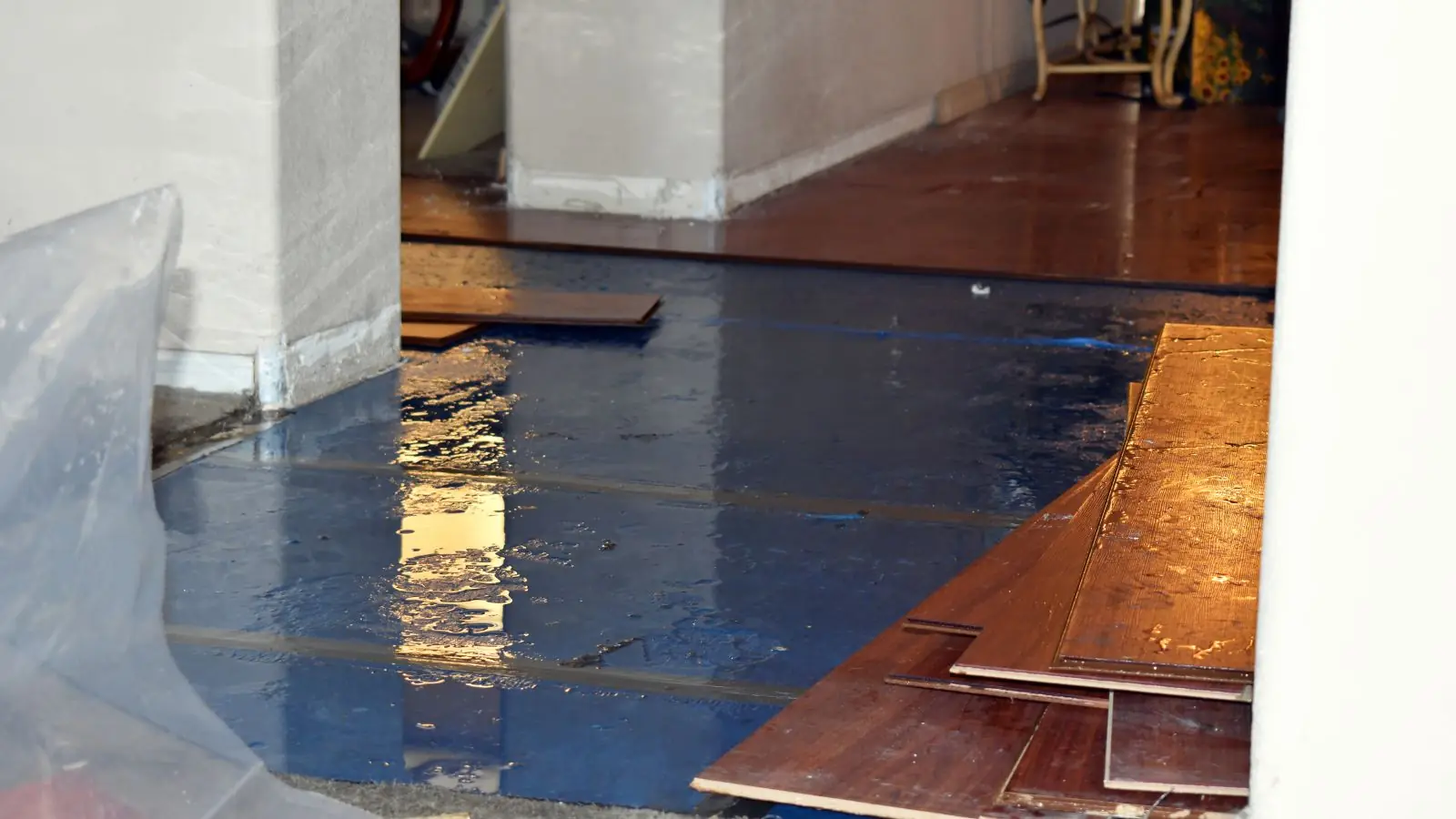
A water damaged wood floor in Duarte, CA usually gives warning before it fails. Boards swell, edges lift, and the surface goes from flat to curved. Wood absorbs moisture slowly and releases it more slowly still, so the visible change often shows up a day or two after the water, and by then the floor and the subfloor under it are already carrying a heavy moisture load.
The question is whether drying in place can save the boards or the floor has to come up. The answer depends on the type of floor, the kind of water, and how fast drying starts.
Cupping, crowning and buckling
- Cupping. The edges of each board rise higher than the center. It usually means moisture came from below, such as a slab, a crawlspace or a leaking pipe.
- Crowning. The center of the board is higher than the edges. It can follow cupping that was sanded too early, or moisture from above.
- Buckling. Boards lift off the subfloor, sometimes in a ridge. It is the most serious stage and often means the flooring is beyond saving.
- Finish damage. White haze, peeling or raised grain in the coating shows water reached the surface layer.
- Gaps after drying. Boards shrink as they dry and may show gaps. Small gaps are common and may close with the seasons.
- Dark spots or black rings. Long exposure, trapped moisture under the finish or mold growth. This needs a closer look.
Decision table. Floor symptom, meaning, action
| Floor symptom | What it usually means | Action |
|---|---|---|
| Slight cupping, floor still firmly nailed | Moisture from below, caught early | Start drying in place with mats, air movers and dehumidifiers, then recheck readings |
| Crowned boards | Moisture from above, or sanded too soon | Dry first. Wait for stable readings before any sanding |
| Boards lifting or ridged | Severe swelling, loss of grip on the subfloor | Likely replacement. Remove affected boards so the subfloor can dry |
| Finish whitening or cloudy | Surface moisture in the finish | Dry quickly. Often cosmetic if the wood is dry underneath |
| Dark staining, musty smell | Long-term moisture or mold | Stop, document, call for mold assessment and removal |
| Engineered or laminate swelling at edges | Core layer absorbed water | Replacement is common, since the core does not return to shape |
| Water came from outdoors, mud or debris on the floor | Contaminated water | Treat as contaminated. Expect removal of the affected flooring |
When drying in place works
Solid hardwood nailed over a plywood subfloor, wet from clean water, caught within a day or two, has a decent chance. The goal is to bring moisture content back to the level of dry flooring elsewhere in the house, using readings from a pin meter rather than appearance.
A crew sets up drying mats, which pull moisture out through the board surface using suction. They add air movers across the room and LGR dehumidifiers to keep the air dry enough to draw moisture out. Technicians check readings daily and shift equipment as the pattern changes. Cupped boards often flatten as they dry, and refinishing only happens once readings are stable.
This work falls under water mitigation, and it can take several days or longer depending on the thickness of the boards and the moisture trapped below.
Floor cupping or lifting?
The 24/7 line can send a crew with moisture meters, drying mats and dehumidifiers. The sooner readings are taken, the more flooring can be saved.
When replacement is the right call
Replace the floor when boards have buckled, when engineered or laminate layers have swollen, when finish and subfloor are delaminating, or when mold shows on the underside. Glue-down wood over a concrete slab is also tricky, because trapped moisture can hold for weeks. Water that has been outdoors, or has passed through dirty drains, is treated as contaminated under S500 practice, and porous flooring exposed to it usually comes out.
Check below the boards
Hardwood is only the top layer. Moisture also soaks into the plywood or board subfloor, and on a slab it can sit under the wood for weeks. A good inspection uses a pin meter on the boards, a pinless meter or thermal camera across the room, and a reading of the subfloor where possible, often after pulling one board near a wall.
If the subfloor stays wet, the flooring will keep cupping or buckling after you think the job is done. That is why a crew keeps taking readings after the surface looks fine, and why refinishing, the final step of water damage repair, waits until the numbers settle.
Why 24 to 48 hours matters
The EPA and CDC advise drying water-damaged items within 24 to 48 hours to prevent mold. Hardwood is slower to give up water than carpet, so the window is tight. After that window, wood fibers swell, finish seals trap moisture, and the subfloor starts to hold water. Each day makes drying slower and replacement more likely.
Start with the basics. Soak up standing water, lift rugs and furniture legs, run fans, and call a crew that can take real moisture readings. Pull baseboards if a pro asks you to. Do not use heat guns or space heaters to force-dry wood, which can crack boards and crush the finish.
Duarte local note: runoff at the doors
Duarte sits below burn areas in the foothills, and history there is documented. USGS recorded a debris flow above the Las Lomas debris basin in January 2017, after the June 2016 Fish Fire. For most homes this never reaches the door, but when runoff does come to a threshold, the floor nearest the entry takes it first.
LA County Public Works advises that small isolated mud and debris flows are possible in burn areas during their first two years of recovery, and that sandbags can direct runoff, with free sandbag locations at READY.LACounty.gov. Check your threshold seal before the wet season, and know that standard homeowners policies typically exclude flood and mudflow, so ask your insurer what applies.
Sources: USGS, LA County Public Works, CDI
Nearby towns with similar risks
The same floor rules apply in Monrovia, where a debris flow in Monrovia Canyon Park in December 2021 broke a water main.
Homes in Glendora deal with the aftermath of the 2014 Colby Fire and the debris flows that followed. Both are reminders that foothill water can arrive by pipe or by hillside, and that a wood floor wet from either source needs readings, not guesses, before anyone decides to keep or replace it.
Questions Duarte homeowners ask
Often yes, if it is dried slowly and evenly and caught early. Cupped boards frequently flatten as moisture content drops. Wait for stable meter readings before deciding to sand.
Plan on days, not hours, and sometimes longer for thick boards or wet subfloors. Daily readings tell the crew when the floor reaches its dry standard. Rushing it with heat can damage the boards.
They help when the floor is firmly attached and the water was clean. Mats pull moisture through the board surface while air movers and dehumidifiers handle the room. They do not rescue buckled or contaminated flooring.
No. Sanding wet wood locks in problems and can cause crowning. Wait until moisture readings match dry flooring elsewhere in the house, then refinish.
Do not mop it into the floor. Photograph it, remove standing water and call for readings quickly, since runoff may carry mud and debris. Standard homeowners policies typically exclude flood and mudflow, so ask your insurer, and check sandbag options at READY.LACounty.gov before the next storm.
No, but mold needs moisture and the EPA says to dry water-damaged items within 24 to 48 hours. If you see dark growth under boards, stop and call a professional. Health questions go to a physician.